In today’s hyper-competitive retail environment, setting a shopping district apart requires more than a strong brand mix or seasonal sales. Consumers increasingly crave memorable experiences and Instagrammable moments. That’s where LED sphere screens come in. With 360° visibility, creative form factors, high brightness, and fast refresh rates, they’ve evolved from simple digital displays into traffic-driving landmarks. Why are more malls, pedestrian streets, and lifestyle hubs installing these globe-shaped screens? And how exactly do they enhance tech appeal while increasing footfall? Let’s break it down from five key angles.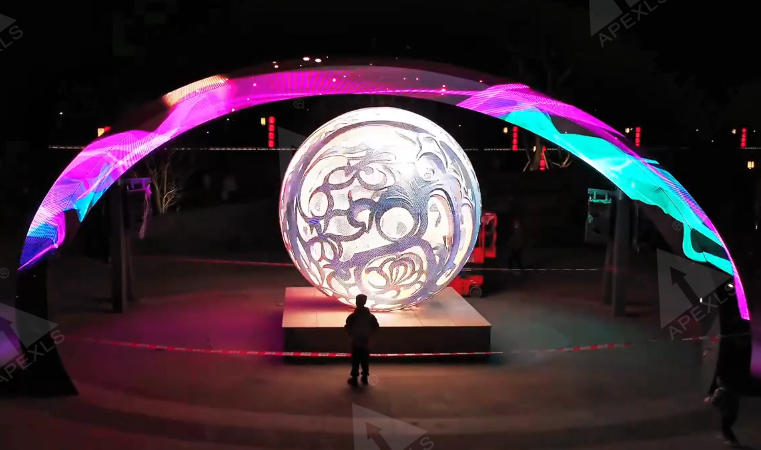
Apexls Naked-eye 3D outdoor LED spherical screen
1. Visual Breakthrough: From Ad Billboards to Light Art
Conventional rectangular LED screens are clear but easy to ignore. A spherical screen, however, feels sculptural and futuristic – like a floating planet or a living piece of light art. When shoppers encounter a 3-meter-diameter "dream sphere" playing animated brand content in a central plaza, their first instinct is to stop and pull out their phone. That spontaneous photo-sharing on TikTok, Instagram (though for Western readers, focus on Instagram and TikTok) generates free organic reach. According to data from a first-tier city shopping mall in the US, after installing an LED sphere screen, social media mentions of the location increased by 210%, and weekend foot traffic rose 18% year-over-year. A sphere screen isn't just a cost – it’s a content magnet.
2. Full-Angle Visibility, Eliminating Dead Zones
Flat screens have blind spots – from the side they’re hard to see, and from behind they’re invisible. LED sphere screens offer true 360° visibility. No matter which direction shoppers approach from, they can clearly see brand messages, event countdowns, or directional cues. Mall operators can leverage this by segmenting content across the sphere: top section for major event teasers, middle for rotating dining and retail offers, bottom for QR codes linking to wayfinding or digital coupons. For complex mall layouts, a sphere screen placed near escalators or underperforming corners can use dynamic arrows or color cues to guide traffic toward high-value tenants, effectively reviving dead zones.
3. Dynamic Content, Sustained Novelty
Traditional static signage or holiday decorations take days to update and quickly become stale. LED sphere screens, paired with remote content management systems, can refresh content in minutes. For example: a red lantern for Lunar New Year, a pink heart for Valentine’s Day, a soccer ball during the World Cup. More advanced setups allow interactivity – shoppers scan a QR code on the sphere to upload a photo, which then rotates around the globe in real time. Or integrate with the mall’s loyalty program: display personalized birthday greetings for members. This constant freshness encourages repeat visits, increasing dwell time and repurchase rates.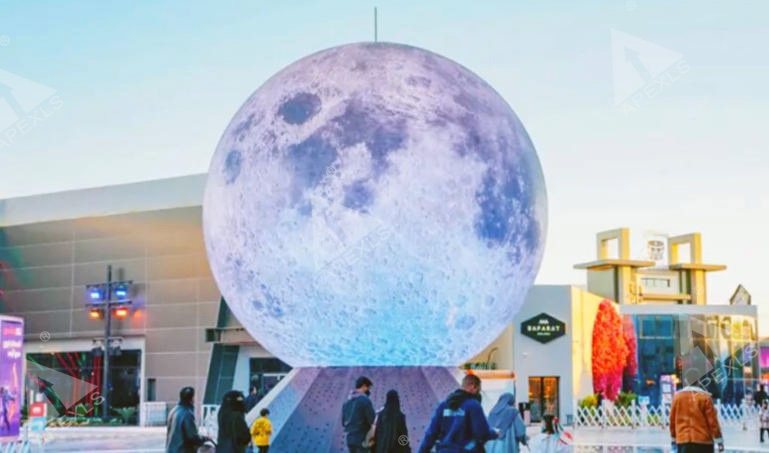
Saudi Arabia's 8-meter-diameter outdoor LED spherical screen
4. Technical Specs for All-Weather Reliability
For outdoor shopping districts, durability is non-negotiable. A high-quality outdoor LED sphere screen should meet these standards:
IP65 or higher – dustproof and waterproof, surviving heavy rain
Luminance ≥5500 cd/㎡ – clear visibility even in direct midday sun
Refresh rate ≥1920 Hz – no scan lines when filmed with smartphones
Intelligent thermal management – stable operation during summer heat
The modular design also supports flexible installation (pole-mounted, ceiling-suspended, or embedded) and easy maintenance via rear-access panels or pull-out modules without closing the mall. With proper care, a premium spherical screen can last over 100,000 hours, making its daily cost far lower than the value it generates in ad revenue and foot traffic.
5. ROI: More Than a Screen – A Digital Landmark
Some may ask: “Aren’t sphere screens more expensive than flat ones?” Let’s look at the returns. First, they command premium ad rates – beauty, auto, and FMCG brands are willing to pay more for “premium creative real estate.” A shopping mall in a mid-sized US city leased its 5-meter diameter spherical screen by time slots, generating over $6,000 in media revenue per month. Second, the screen itself becomes a selfie hotspot, driving sales at nearby cafes, snack kiosks, and pop-ups. Finally, in many cities, “tech landmark” installations can qualify for night-economy grants or favorable zoning recognition, adding another layer of value.
Conclusion
When tech appeal translates into social currency, and a display becomes a gravity field for shoppers, the LED sphere screen is no longer just a display – it’s a strategic asset for breaking through retail sameness. If you’re looking for a solution that combines visual impact, operational flexibility, and long-term ROI, consider starting with a “glowing planet.” Contact us today for custom quotes and turnkey solutions – and make your shopping district the next city landmark.