
In commercial display and cultural performance scenarios, large LED displays have become core visual carriers. Whether it is for brand promotion and promotion-driven customer acquisition in malls, or atmosphere creation and plot presentation on stages, the size adaptation, model matching and price control of displays directly affect the final effect and return on investment. Apexls will sort out scientific selection logic according to the particularities of the two major scenarios of malls and stages, helping users select suitable products.
I. Determine the Scenario First, Then Select the Size: Core Adaptation Logic for the Two Scenarios
The core principle of size selection is "matching viewing distance and spatial layout". The passenger flow distribution and viewing angles in malls and stages are significantly different, requiring targeted design.
1. Mall Scenarios: Balancing Customer Flow Attraction and Spatial Compatibility
The core demand for mall displays is to attract the attention of passing crowds, while also adapting to different spaces such as atriums, street-facing facades and store entrances. The size selection should follow the rule that "viewing distance determines the minimum size":
Atrium large screens: As the core visual focus of the mall, the viewing distance is usually 5–20 meters. The recommended size is 3m×5m to 4m×6m (16:9 golden ratio), which can ensure visibility at long distances without excessively occupying space and affecting traffic flow. If the mall has a high floor height (over 8 meters), the size can be appropriately increased to 5m×8m to enhance visual impact.
Street-facing facade screens: The viewing distance is mostly 10–50 meters. The size should be designed according to the area of the building wall, with common sizes ranging from 6m×10m to 8m×15m, ensuring that vehicle and pedestrian traffic on the street can clearly capture advertising information, while coordinating with the architectural style.
Small screens at store entrances: Mainly for short-distance viewing (3–5 meters), the recommended size is 1m×2m to 2m×3m, flexibly displaying new product and discount information without occupying operating space.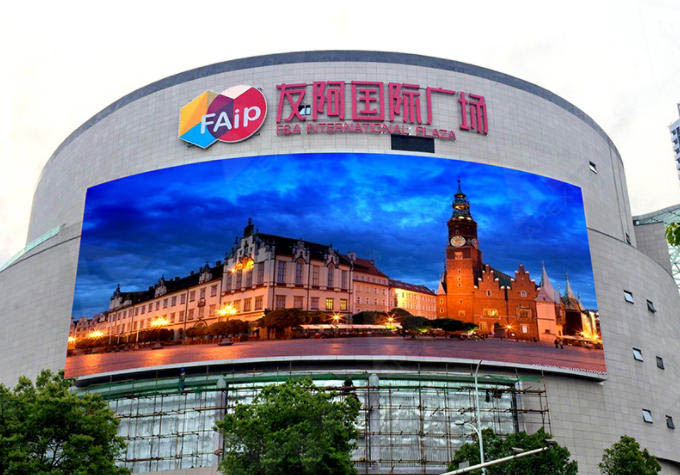
2. Stage Scenarios: Adapting to Performance Forms and Visual Atmosphere
Stage displays need to balance image integrity and performance interactivity, and the size selection should be determined based on the stage scale and the scope of the auditorium:
Small and medium-sized stages (e.g., theaters, press conferences): The viewing distance is 3–10 meters. The main screen is recommended to be 2m×3.6m (16:9 ratio), which can be paired with two 1m×2m side screens to form a visual system with clear primary and secondary layers, suitable for scenarios such as speeches and small-scale performances.
Large-scale stages (e.g., concerts, galas): The viewing distance is 10–50 meters. The size of the main screen can be customized to 5m×12m to 8m×16m, or even adopt curved and special-shaped splicing (such as circular screens, wave screens) to enhance the sense of immersion. Meanwhile, floor screens and sky screens can be added to create a 360° visual surround effect.
Rental stages: Priority should be given to modular display panels. The recommended size of a single module is 500mm×500mm or 500mm×1000mm, facilitating quick splicing of different sizes to meet the flexible needs of temporary performances.
II. Model Matching: Core Parameters Determine Display Effect and Applicability
The model of an LED display is mainly defined by parameters such as pixel pitch (P value), brightness and refresh rate. The different parameter requirements of various scenarios directly determine the model selection.
1. Interpretation of Core Parameters and Scenario Matching
Pixel pitch (P value) is the key to determining image clarity, with the unit of millimeters (mm). The smaller the P value, the higher the pixel density and the finer the image, but the higher the cost. Combined with the characteristics of mall and stage scenarios, the recommended matching is as follows:
Supplementary Note: For stage scenarios involving live broadcasting and filming, models with a refresh rate ≥ 3840Hz should be selected to avoid water ripples and flicker; for outdoor scenarios, models with a protection level of IP65 or above should be selected, which have dustproof, waterproof and lightning protection functions to adapt to harsh weather conditions.
2. Key Points for Avoiding Pitfalls in Model Selection
Avoid blindly pursuing "high configuration": If small-pitch models below P2.5 are selected for mall facades, although the image is fine, the human eye cannot distinguish the difference when the viewing distance exceeds 10 meters, resulting in doubled costs; for stage scenarios that do not require live broadcasting, a refresh rate of 1920Hz can meet the demand, and excessive pursuit of high refresh rates will lead to unnecessary expenses. Meanwhile, brightness should be adjusted according to ambient light—for example, the indoor light in malls is soft, and excessively high brightness can easily cause eye irritation; in outdoor strong light environments, insufficient brightness will result in blurry images.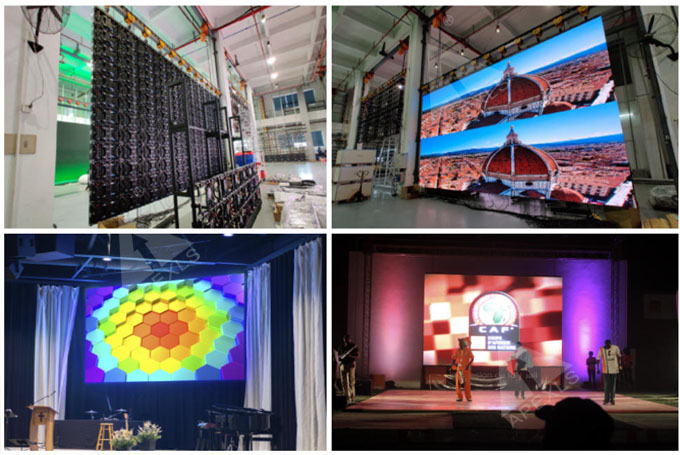
III. Price Analysis: Core Factors Affecting Costs and Budget Control Skills
The price of large LED displays is affected by multiple factors such as model, size, brand and supporting services. In 2026, affected by rising raw material prices, the overall industry price is on an upward trend, requiring scientific budget planning.
1. Price Composition and Market Conditions
The current market price is mainly based on the "unit price per square meter", with significant differences in unit prices for different models: the unit price of indoor P2.5–P4 models is about $1,000 - $2,000 per square meter; the unit price of outdoor P6–P10 models is about $600 - $1,000 per square meter; the unit price of stage rental P2.9–P4.81 models is about $1,000 - $1,500 per square meter (including installation and commissioning). The larger the size, the higher the total cost. Meanwhile, additional consideration should be given to the cost of supporting equipment such as control systems, power supplies and brackets (accounting for about 15%–25% of the total screen price).
Cost-influencing factors: The smaller the pixel pitch, the higher the unit price—small-pitch models such as P1.2 can have a unit price of over $2,000 per square meter ; outdoor models have a higher unit price than indoor models with the same pitch due to their protective and heat dissipation design; brand premium is obvious—first-tier brands have a unit price 20%–30% higher than second-tier brands, but provide more comprehensive warranty services (usually 2–3 years of warranty).
2. Practical Budget Control Skills
Accurately match parameters: Determine the P value based on the viewing distance. For example, if the viewing distance of a mall atrium is 5 meters, a P3 model is sufficient, and there is no need to pursue P2.5; for outdoor long-distance viewing scenarios, P8–P10 models offer the best cost performance.
Flexibly choose procurement modes: For long-term fixed use (e.g., mall atrium screens), direct procurement is recommended; for temporary performances and events (e.g., stage rental), the rental mode can be selected to reduce initial investment, with the rental price being about 500–1,500 yuan/m²/day.
Pay attention to the time lag of cost conduction: The pressure of rising raw material prices in 2026 will be mainly concentrated in the first half of the year. If the project schedule is flexible, procurement can be arranged in the second half of the year, and the price of some models may drop slightly. Meanwhile, priority should be given to manufacturers with sufficient inventory to avoid price increases caused by raw material shortages.
Integrate supporting services: Choose one-stop service providers that offer "screen + installation + after-sales service", which can reduce intermediate link costs and ensure installation quality and later maintenance support.
IV. Full-process Selection Guide: Key Steps from Demand to Implementation
Preliminary Research: Clarify Core Requirements
Determine the usage scenario (mall/stage, indoor/outdoor), viewing distance and budget range, and clarify core functional requirements (e.g., whether live broadcasting, special-shaped splicing, interactive touch control are needed) to avoid rework in later stages.
Parameter Locking: Accurately Match Models
Based on the results of preliminary research, lock core parameters in the order of "viewing distance → pixel pitch → brightness → refresh rate", refer to the model matching standards recommended in this article, and form an initial selection plan.
Effect Verification: Avoid Selection Risks
Request suppliers to provide prototype testing or 3D effect rendering to verify whether the image clarity and color reproduction meet the requirements; for outdoor scenarios, additional testing of the brightness anti-glare capability is required; for stage scenarios, the image stability during live broadcasting needs to be tested.
Contract Signing: Clarify Rights, Responsibilities and Guarantees
When signing the contract, clearly specify the screen parameters, size, price and delivery cycle, and indicate the warranty period, after-sales response time (24-hour response is recommended) and installation and commissioning standards to avoid disputes in later stages.
Conclusion: The Suitable One is the Best One
The selection of large LED displays for malls and stages does not require blind pursuit of high configuration. The core is to achieve a balance of "scenario adaptation, effect compliance and cost control". Through the size adaptation logic, model matching standards and price control skills sorted out in this article, users can avoid selection misunderstandings and accurately select products that meet their needs. For further refinement of the selection plan (e.g., specific space size calculation, accurate budget quotation), you can consult Apexls based on specific scenario parameters.